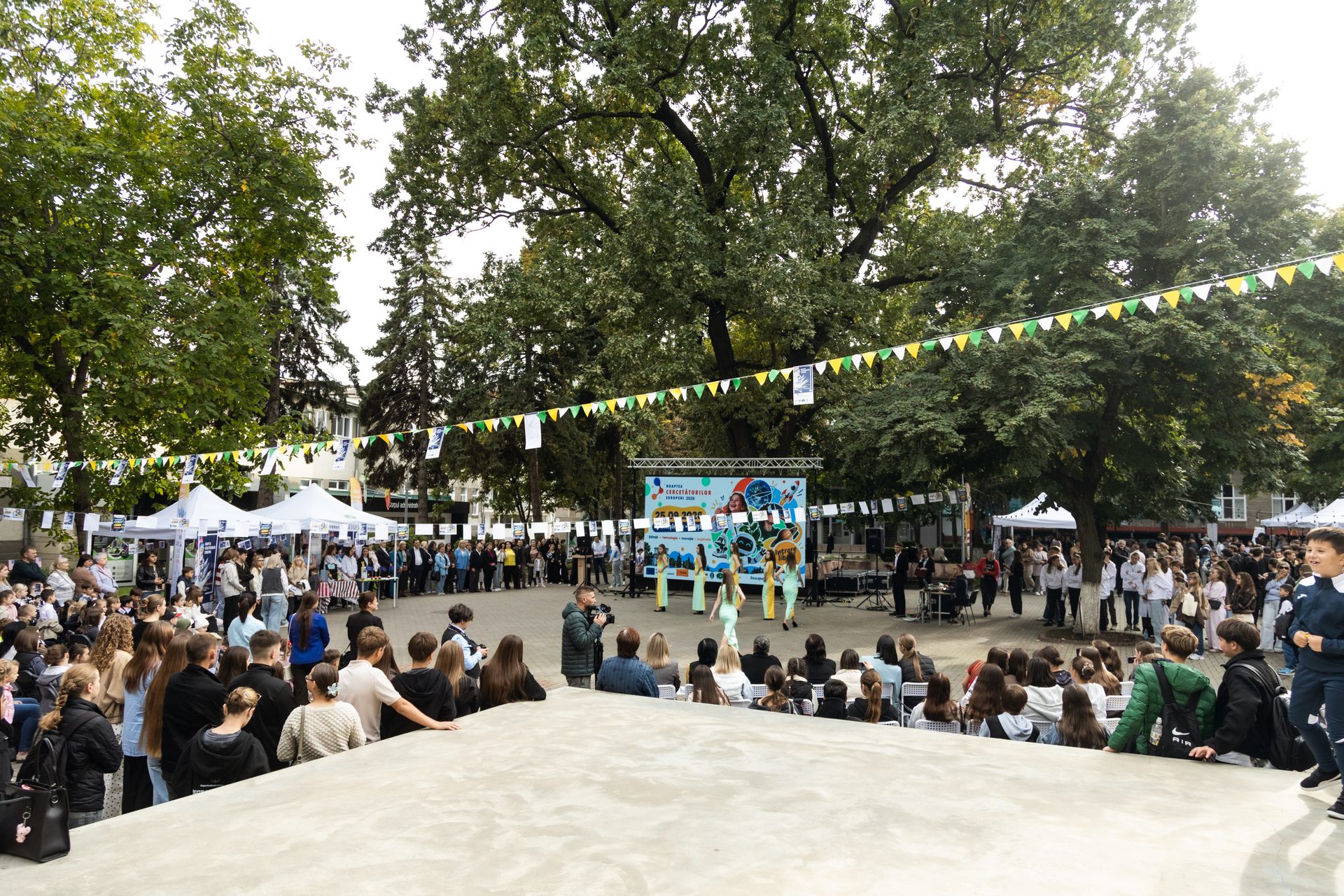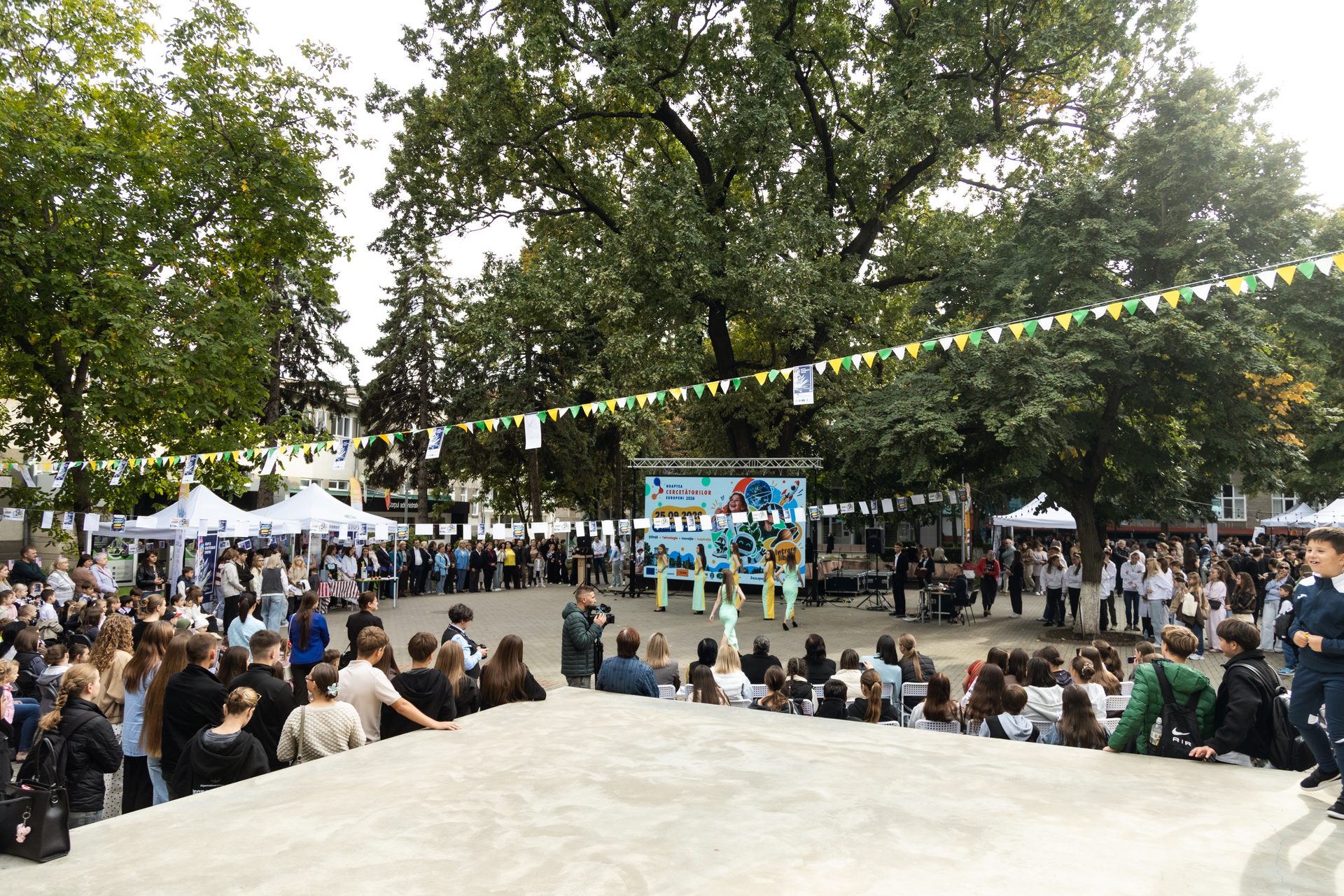
On 25 September 2026, research stepped out of the laboratories and into the heart of the community at European Researchers’ Night 2026, held simultaneously in Chișinău and Bălți. For one evening, both locations became spaces for curiosity, experimentation and direct dialogue with researchers.
The USARB square also became a space for experimentation and discovery. The programme brought together hundreds of researchers, academic staff, students, school pupils, children and families around exhibitions, demonstrations and interactive workshops.
Participants had the opportunity to explore robotics, virtual and augmented reality, activities using FPV goggles, STEAM and eco-workshops, and the Open Science Café, where they could talk directly with researchers. The programme also included visits to USARB laboratories, first-aid activities, interdisciplinary exhibitions, and experiences connecting science with art, economics, engineering and food technologies.
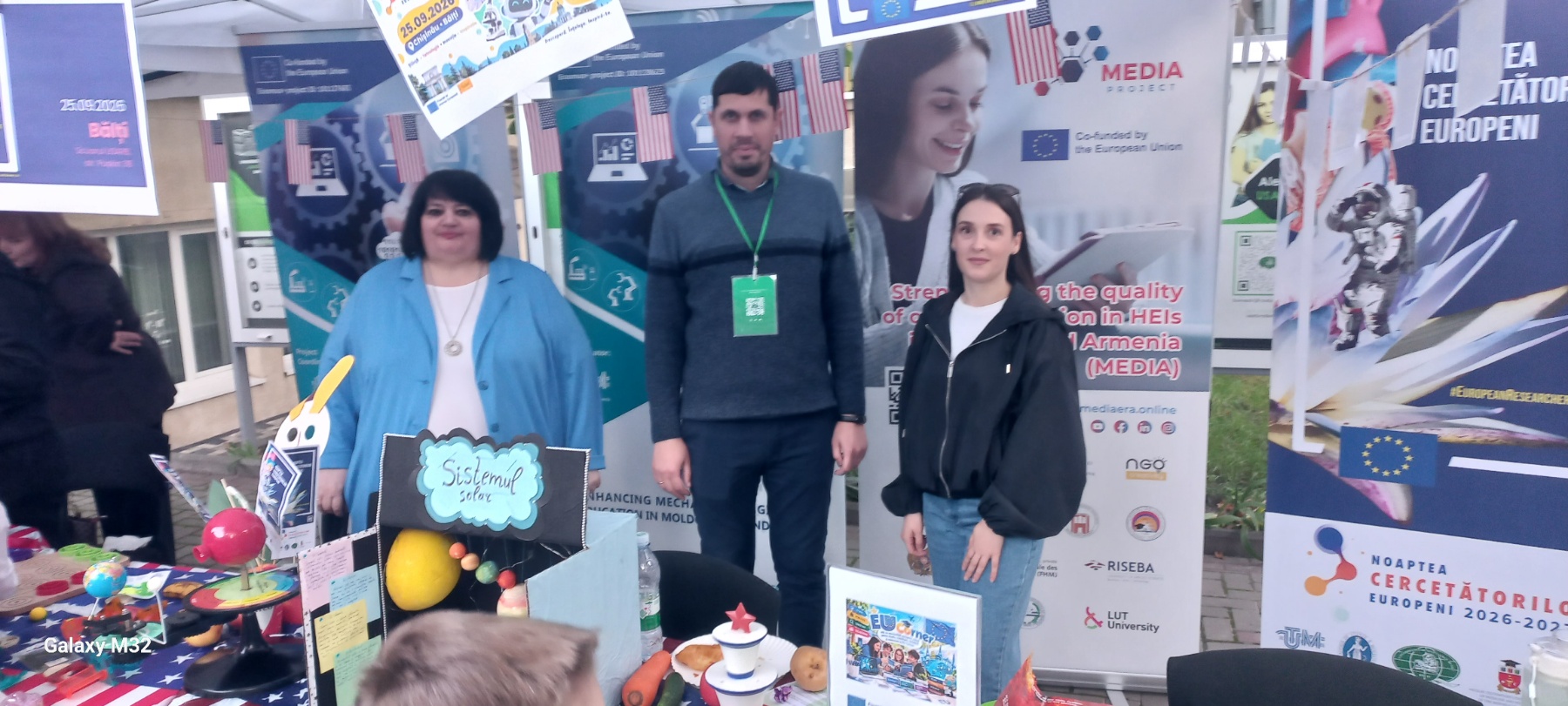
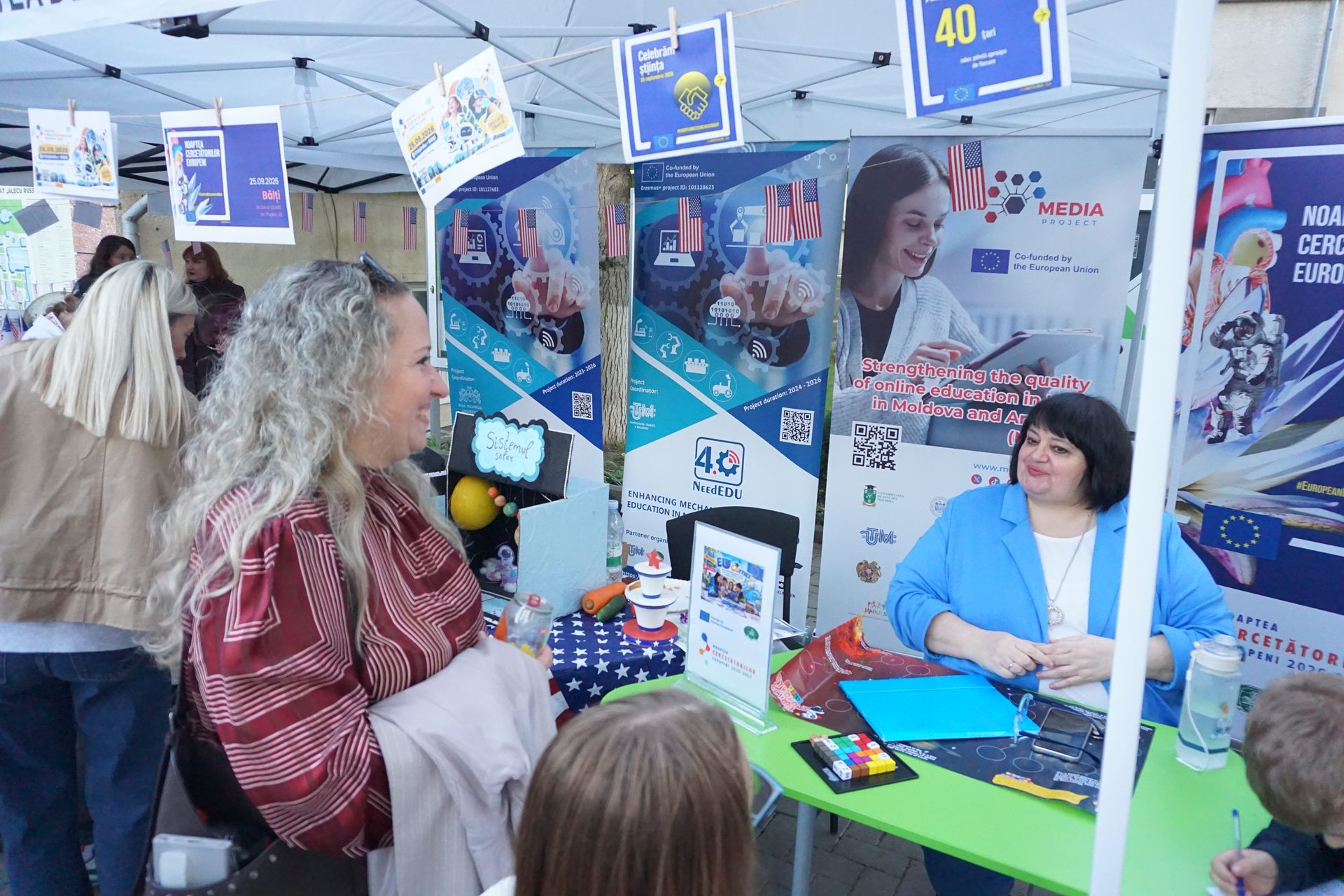
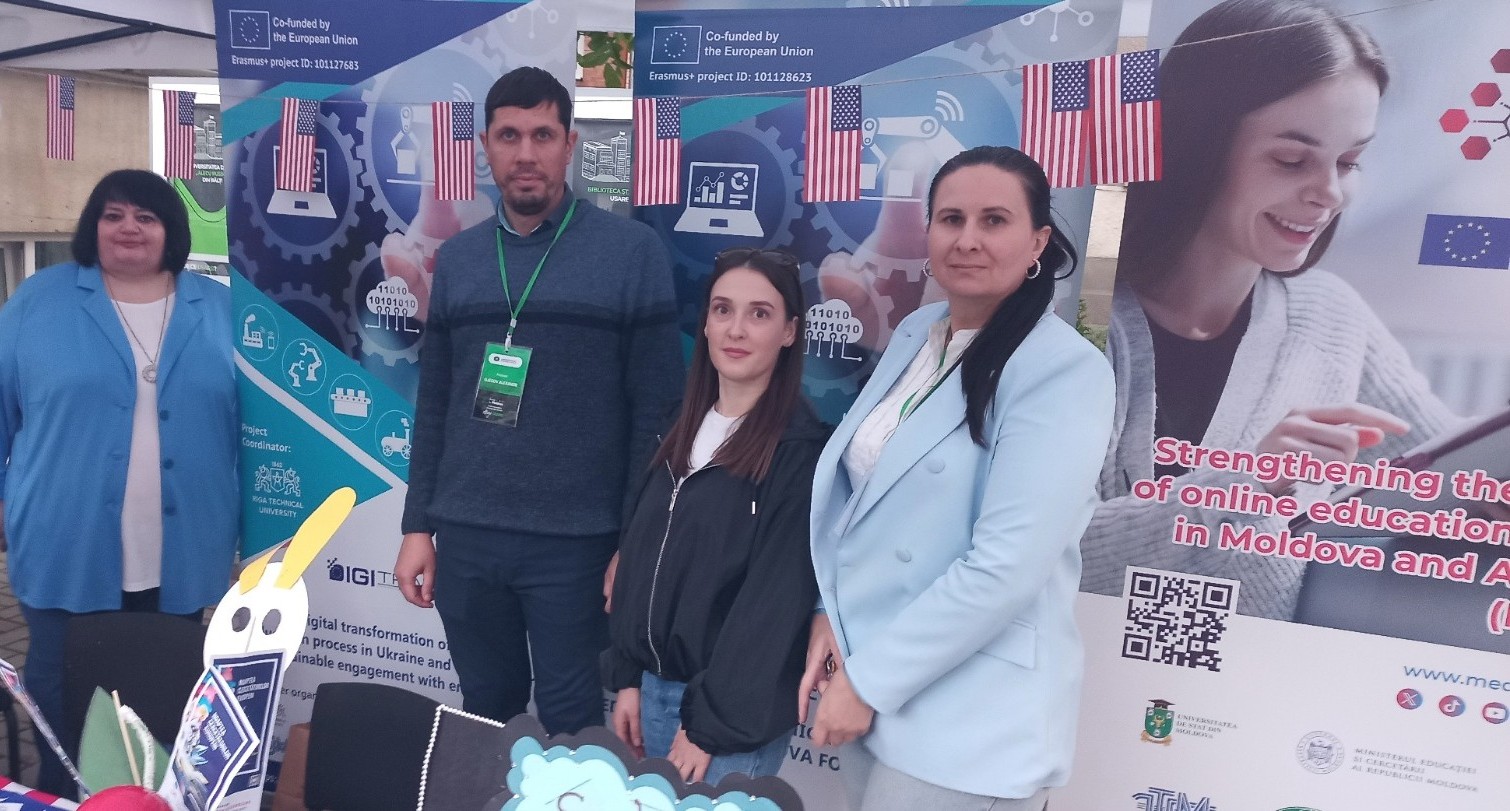
The EU Corner played an important role, showcasing several international projects implemented at USARB with the support of the European Union: Sci-TRUST, MEDIA, DIGITRANS and NeedEDU. Visitors had the opportunity to learn more about the projects’ aims and activities, and about how international cooperation contributes to the development of research, education and innovation at the university.
The presentation of the DIGITRANS project—“Digital Transformation of HEIs’ Education Process in Ukraine and Moldova for Sustainable Engagement with Enterprises” (reference number: 101127683-DIGITRANS-ERASMUS-EDU-2023-CBHE), part of the Erasmus+ programme and co-funded by the European Union—offered examples of what USARB’s participation in European projects means in practice: ideas, partnerships, the exchange of experience, institutional development and connections with the international academic community.
The enthusiasm of the public—children, young people, families, teachers and visitors of all ages—brought energy to the evening and turned every experiment and demonstration into an opportunity for dialogue and learning.
For young people, the EU Corner also served as an invitation to discover European opportunities for research and collaboration, and to view their own academic and professional paths from an international perspective.